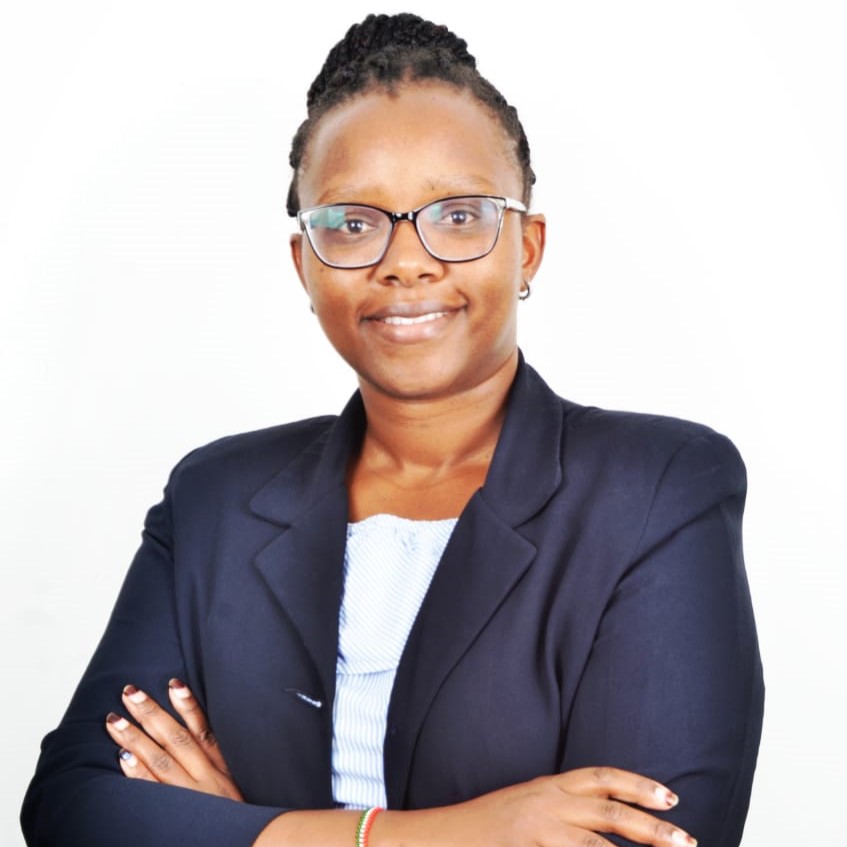
The idea of an organization targeting attitude and behavior change, referred to as "Jua Badili; transforming the habits of the mind and soul," was conceived by Christine Kaari in the year 2020. The birth of Jua Badili was motivated by a deep-seated belief in securing a better society for future generations, patriotism, giving the best to our immediate society, and a desire to offer practical solutions to social and political needs and gaps.
Together with likeminded friends Caroline, Seamus, and Elvis, the group embarked on an ambitious program of research and data collection. Their objective was to transform people through advocacy, mentorship, social work, and seminars on public participation and fundamental rights and freedoms. The outcomes of these engagements are focused on assisting the government and other stakeholders in steering the country towards achieving the Global Goals to end hunger, poverty, illiteracy, AIDS, and all forms of discrimination, as well as building strong institutions.
The goal of Jua Badili is to focus on transforming the attitude of Kenyan people towards challenges such as corruption, inequality in access to services, elections and leaders, as well as social issues like alcoholism and sex education and GBV. The main target group is the youth population and teenagers, aiming to ignite young minds with a passion for integrity, patriotism, rule of law, knowledge, and change.
Kenya among other countries made a commitment to prioritize the progress of the Sustainable Development Goals to ensure that by 2030 all citizens enjoy peace and prosperity. In line with this commitment the government embarked on ambitious programs in roads and infrastructure, health care, affordable housing and review of education curriculum as well as ensuring education is a compulsory right offered for free in all public institutions. President Uhuru Kenyatta upon his reelection for a 2nd term in 2017 unveiled the Big Four Agenda which he termed as response to people’s needs and concerns. The Big Four included enhancing manufacturing, food security and nutrition, universal Health Coverage and affordable housing. The president’s term ends in 2022 and it is not clear how far his legacy projects have been implemented, despite budgetary allocations every financial year. However, in Kenya all ambitious programs in the past and present have been derailed by corruption, poor service delivery, inadequate funding or diversion of resources, inadequate public participation, inequality and lack of access by a majority of the population.
Education inequality especially with the roll out and implementation of the Competency Based Curriculum where a lot of monetary resources are required threatens to increase the already existing gap largely due to economic inequality in Kenya. Learners in public and community schools are likely to be disadvantaged in comparison to their counterparts in some private schools from well to do background with adequate infrastructure, resources and staffing of trained teachers. If this inequality is not addressed, we risk a discriminative system of education that serves the children and desires of the chosen few. Just as the colonial education discriminated against the natives preparing them for low level jobs as drawers of water and hewers of wood so will CBC perpetuate injustice to a leaner in Turkana County who studies under a tree while their counterparts in a private school in Nairobi attends a digital literacy lesson in a state-of-the-art computer Lab. In order for the goals of CBC to be realized fully schools need to be adequately resourced and all stakeholders engaged actively and adequately. The economy of any nation is intricately interlinked to the education of its citizens as it is highly dependent on the education sector to provide skilled labor, expertise and mechanical resources. The Kenyan government continues to invest heavily in the education sector but the issues of Access, equity and equality continue to rock the bed of quality education.